
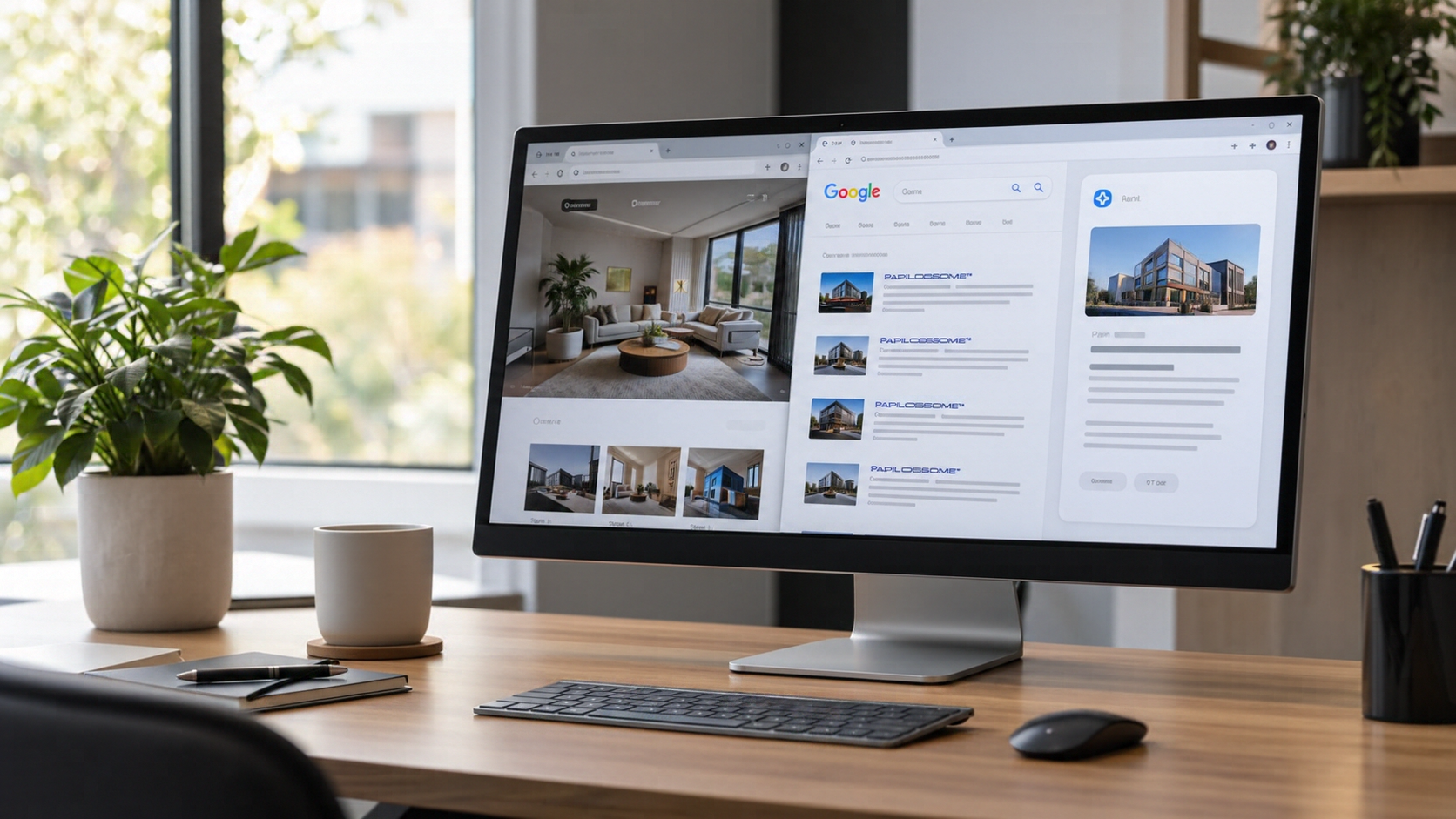
Imagine a potential customer looking for exactly the services your business offers. They might scroll through Google results, or they might ask ChatGPT for a quick recommendation. Either way, they’re ready to find someone who can help.
So here’s the big question: does your brand show up when they search?
Online discovery now reaches well beyond traditional search listings. Customers use AI-powered tools to research products, compare services, and get fast answers. That’s why Google and AI search visibility matters more than ever for growing businesses.
Search Engine Optimization (SEO) helps your website appear in traditional search results. Answer Engine Optimization (AEO) focuses on clear, accurate information that works well in answer-driven search experiences. The good news is that you don’t have to abandon traditional SEO to adapt. The strongest approach blends helpful content, technical accessibility, and a consistent online presence.
In this guide, you’ll learn:
- How SEO and AEO work together
- Seven practical steps to improve your discoverability
- Common mistakes to avoid
- When it makes sense to bring in professional support
Why Google and AI Search Visibility Matters
Your customers don’t use just one platform as they decide who to hire. Someone might discover your business on Google, compare a few options with an AI assistant, and then visit your website before reaching out.
Each of those moments is a chance to make a great impression. Your online presence should support every step of that journey.
Customers Search in Different Ways
Traditional searches often use short phrases, such as “website development agency.” AI-powered searches tend to sound more like real conversations, with detailed questions.
For example, people might ask:
- Which website platform is best for my business?
- How can I improve my website’s online visibility?
- What should I look for when hiring an SEO agency?
- How do I choose a reliable ecommerce developer?
Every one of these questions is an opportunity. When your website offers clear, informative answers, you give both people and search systems a reason to pay attention.
Brand Discovery Goes Beyond Rankings
Traditional rankings still matter, but they’re no longer the only way to measure online visibility. AI-powered experiences may summarize information, mention specific businesses, or link to helpful sources.
Keep in mind that these responses vary across platforms and even between individual searches. That’s why it pays to monitor several discovery channels instead of fixating on a single result.
Understand How SEO and AEO Work Together
SEO and AEO share the same core foundation. Both benefit from useful content, clear website organization, and accurate business information. Where they differ is in the type of discovery experience they support.
SEO Supports Traditional Search Discovery
SEO helps search engines find, understand, and evaluate your website content. It’s the groundwork that helps your pages earn a spot in organic results.
Common SEO activities include:
- Keyword research
- On-page optimization
- Technical SEO
- Internal linking
- Content development
- Local SEO
- Search performance monitoring
These improvements can strengthen your organic search visibility. That said, rankings depend on many factors, and no one can honestly guarantee them.
AEO Supports Answer-Driven Discovery
Answer Engine Optimization is all about making your information useful and easy to access for question-based searches. Think clear explanations, relevant examples, and well-organized content that gets straight to the point.
It’s worth knowing that AEO is an industry term. It isn’t a separate Google ranking system, and it doesn’t come with guaranteed results.
Why Both Matter
A coordinated SEO and AEO strategy helps your business show up for both traditional searches and conversational questions.
Here’s a simple example. An ecommerce agency might optimize its service page for relevant development searches. It could also publish guides that answer common questions about ecommerce platforms and website features. Together, these pieces support customers at different stages of their research.
Build a Strong Website Foundation
Your website is often the main source of information about your business. Before you explore advanced tactics, make sure visitors and search engines can easily reach your most important pages.
Make Your Website Easy to Navigate
Use clear menus and logical page categories. Visitors should find your services, company information, and contact options within seconds.
If important pages are buried under confusing menus, people will likely give up and move on. Keep navigation simple and intuitive.
Improve Mobile Usability
Many of your visitors will arrive on a smartphone or tablet, so your site needs to feel comfortable on smaller screens. Use readable text, easy-to-tap buttons, and responsive layouts.
Review Technical SEO
Technical problems can quietly block your website from being discovered. A regular checkup helps you catch them early.
Review these key areas:
- Search engine indexing
- Crawlability
- Broken internal links
- Page loading performance
- HTTPS connections
- Mobile compatibility
- Website navigation
Google Search Console is a great free tool for identifying certain indexing and performance issues.
Keep Important Content Accessible
Search systems need to read your information to understand it. Avoid placing essential service descriptions entirely inside images or other inaccessible elements.
Instead, use readable text and descriptive headings. This small change makes your content easier for both people and search engines to understand.
Strengthen Your Brand Visibility in AI Search
Improving brand visibility in AI search starts with clear, consistent information. AI platforms use different systems to find and present content, so no single technique guarantees brand mentions. What you can do is make your business easy to understand wherever it appears.
Explain What Your Business Does
Your website should clearly state what services you offer and who you serve. Vague phrases like “innovative digital solutions” don’t tell anyone much.
Instead, describe your capabilities with specific, useful details. For example, “custom ecommerce websites for small retail brands” is far clearer than a buzzword-filled tagline.
Maintain Accurate Business Details
Keep your company name, contact information, and service descriptions consistent everywhere they appear. When something changes, update your business profiles promptly.
This consistency helps customers recognize your business across different sources and builds trust along the way.
Publish Useful Expertise
Original insights make your website more valuable as a source of information. Share what you know!
Consider publishing:
- Practical service guides
- Industry comparisons
- Educational resources
- Project case studies
- Frequently asked questions
Always keep it honest. Never invent customer results or present hypothetical examples as real projects.
Review Existing Brand Information
Search for your business across relevant platforms and see what comes up. Do the public descriptions accurately reflect your services?
Wherever you control the source, correct outdated or inaccurate information. It’s a simple habit that keeps your brand story clear.
Optimize Your Service Pages for Search Discovery
Your service pages should do more than list what you offer. They should help potential customers decide whether your services are the right fit for them.
Use Descriptive Service Headings
A good heading tells readers exactly what the page covers. “Professional Ecommerce Website Development” communicates far more than “Our Solutions.”
Descriptive headings help visitors and search engines understand your page at a glance.
Explain Your Process
Customers love knowing what to expect before they commit. Walk them through the key stages, requirements, and deliverables of your service.
Keep your explanations practical and accurate. Transparency builds confidence!
Include Relevant FAQs
FAQs can address common concerns before a customer ever picks up the phone. For example, an SEO service page might explain what technical SEO includes.
Make sure each FAQ answers a genuine question. Repeating keywords in question form won’t help anyone.
Add Clear Calls to Action
Visitors should always know what to do next. A clear call to action guides them toward the next step.
Helpful CTAs might include:
- Explore our services
- Request a consultation
- Discuss your project
- Contact our team
Interested in improving your online presence? Explore SEO and digital marketing services from Custom Studioz.
Use Internal Linking to Connect Relevant Content
Internal links help visitors discover related information on your site. They also help search engines understand how your pages relate to one another.
Connect Blogs With Service Pages
An article about search visibility, for example, can link to a relevant SEO service page. This creates a natural path from learning to taking action.
Readers get the information they came for, plus an easy way to explore solutions.
Use Descriptive Anchor Text
Anchor text is the clickable text of a link, and it should describe where the link goes. “Professional SEO services” offers much more context than “click here.”
Keep it natural, though. Using the exact same keyword in every link starts to feel forced.
Link to Relevant Resources
Connect related guides whenever they genuinely help your readers. An article about technical SEO, for example, could link to a guide on website performance.
The golden rule? Every link should be useful and relevant.
Follow Google’s Guidance for AI Search
There’s a lot of buzz around AI search, so it helps to separate established guidance from marketing hype.
Google confirms that foundational SEO practices remain relevant to AI Overviews and AI Mode. According to Google Search Central’s official AI search documentation, websites don’t need special AI-specific markup to appear in these features. That’s welcome news: the fundamentals still work!
Focus on Useful Content
Write information that helps people complete their research. Use clear explanations and relevant examples that answer real questions.
Maintain Technical Accessibility
Make sure your important pages are accessible and eligible for indexing. If technical issues are blocking search engines, fix them as a priority.
Use Structured Data Appropriately
Structured data is code that helps search engines interpret eligible content on your pages. It can be a helpful addition to your site.
However, it doesn’t guarantee rankings, AI citations, or recommendations. Always make sure your structured data accurately matches the information visitors can see on the page.
When Should You Consider Professional SEO and AEO Support?
Many businesses handle basic website improvements on their own, and that’s great! But as challenges grow more complex, professional support can save you time and guesswork.
Consider getting help when:
- Your website receives little relevant organic traffic.
- Important service pages are difficult to discover.
- Your website has unresolved technical SEO problems.
- Existing content doesn’t address customer questions.
- You want to assess your brand’s AI search visibility.
- Your website attracts visitors but generates few qualified inquiries.
A structured review can pinpoint which improvements deserve your attention first.
How Custom Studioz Helps Businesses Improve Online Visibility
A strong digital presence takes more than publishing content. You need clear website information, solid technical foundations, and search strategies that fit your goals.
At Custom Studioz, we offer SEO, website development, content writing, and digital marketing services. Together, these capabilities support a coordinated, practical approach to online discoverability.
Search Engine Optimization
Our SEO services focus on website relevance, technical improvements, and organic search opportunities tailored to your business.
Content Strategy
We help businesses create useful content that explains their services clearly and answers real customer questions.
Website Optimization
Our technical improvements support accessibility, smooth navigation, and stronger website performance.
AI Search Readiness
Clear service information, accurate content, and an organized website structure can help your business support emerging discovery experiences.
Performance Monitoring
Ongoing evaluation helps you understand visibility trends and decide which improvements to prioritize next.
Explore our professional search engine optimization to learn more.
Frequently Asked Questions About Google and AI Search
1. How can I improve my brand’s visibility in Google and AI search?
Start with technical SEO, useful content, accurate business information, and clear service pages. Then monitor your results and keep improving over time.
2. Is SEO still important for AI-powered search?
Yes. Google’s guidance confirms that foundational SEO practices remain relevant to its AI search features.
3. Can AEO guarantee that AI platforms recommend my business?
No. AI platforms select information independently, and no optimization strategy can guarantee recommendations.
4. Does structured data improve AI search visibility?
Relevant structured data helps search engines understand eligible content. However, it doesn’t guarantee AI citations or rankings.
5. How long does it take to improve search visibility?
Timelines vary based on competition, your website’s current condition, content quality, and platform behavior.
Ready to Strengthen Your Brand’s Online Visibility?
Is your website struggling to reach potential customers? Are competitors showing up in searches where your business could offer more helpful answers?
At Custom Studioz, we help businesses strengthen their digital presence through SEO, content strategy, and website optimization. Whether you’re improving traditional search performance or exploring AI search readiness, our team can help you uncover practical, realistic opportunities. Contact Custom Studioz to Discuss Your SEO and AEO Strategy.